
Are you torn between investing in gold or real estate?
In this article, we will compare the recent performance of these two popular investment options.
We will analyze the entry points and investment considerations, as well as examine the types of returns they offer.
We will discuss the liquidity, accessibility, tax implications, and cost analysis of both investments.
Stay tuned as we explore future trends, market factors, diversification strategies, and how to choose the right investment for you.
Introduction to Gold and Real Estate Investments
Investors often seek to diversify their portfolios by considering different investment products such as gold and real estate. Gold, a valuable commodity known for its historical value, and real estate, involving physical property like houses and land, can offer various benefits and risks to investors.
Gold has been used as a store of value and a medium of exchange for centuries, even dating back to ancient civilizations like the Egyptians and Romans. Its rarity, durability, and intrinsic value have made it a popular choice for investors looking to safeguard their wealth against economic uncertainties and inflation.
On the other hand, real estate has been a cornerstone of wealth creation for many individuals and families. The dynamics of the real estate market are influenced by factors such as location, supply and demand, interest rates, and economic conditions.
In terms of gold investments, online dealers play a significant role in providing accessibility and liquidity to investors. They offer a convenient platform for buying, selling, and storing physical gold, reducing the barriers to entry for small-scale investors.
Factors affecting the value of physical properties include market trends, location desirability, property condition, and overall economic stability. Investors need to conduct thorough research and due diligence before investing in real estate to mitigate risks and maximize returns.
Rental properties, for instance, can provide a steady income stream through rental payments, while also offering potential long-term appreciation in property value. Gold Sovereigns, on the other hand, are collectible gold coins that can serve as both a tangible asset and a historical investment piece.
The value of gold and real estate investments can be influenced by economic indicators such as Gross Domestic Product (GDP) and the strength of the Sterling currency. Understanding these macroeconomic factors can help investors make informed decisions when allocating their resources in different asset classes.
Performance Analysis
Analyzing the performance of gold and real estate investments is crucial for investors seeking to understand the trends and returns in these markets. By examining historical data and current market conditions, investors can gain insights into the demand-supply dynamics impacting the performance of these assets.
Gold has been considered a safe-haven asset during times of economic uncertainty, often experiencing price surges when traditional markets falter. On the other hand, real estate investments have shown resilience over time, with property values typically appreciating in the long run. Market trends, such as inflation rates and interest rates, play a significant role in determining the performance of these investment options. Geopolitical events and global economic conditions can influence the demand for both gold and real estate, affecting their respective prices.
Comparing recent performance of gold and real estate investments
In recent times, the performance of gold and real estate investments has been subject to fluctuations driven by market demand, supply dynamics, and global economic conditions.
Gold, traditionally seen as a safe-haven asset, has shown resilience in times of economic uncertainty, often experiencing price surges due to its perceived value as a hedge against inflation.
In contrast, real estate investments are heavily influenced by factors like population growth, urbanization trends, and interest rates, leading to varied performance across different regions and property types. Market sentiment plays a crucial role in determining the attractiveness of real estate, impacting both residential and commercial property markets.
Entry Points and Investment Considerations

When considering entry points for gold and real estate investments, investors should evaluate market conditions, asset values, and price trends to make informed decisions. Understanding the factors that influence the value of properties and gold prices is essential for successful investment strategies.
For gold investments, it’s crucial to monitor global economic stability, geopolitical tensions, and financial market volatility, as these factors heavily impact gold prices. Keeping an eye on inflation rates and the strength of the US dollar can provide insights into the potential movement of gold prices. On the other hand, in the real estate market, investors need to analyze location desirability, property appreciation rates, rental yields, and overall economic growth in specific regions.
Timing plays a significant role in investment decisions for both asset classes. Observing historical price patterns, understanding demand-supply dynamics, and consulting with financial experts can help determine the opportune moments to enter these markets.
Investors should diversify their portfolio to mitigate risks associated with market fluctuations and economic uncertainties. Balancing gold investments with other asset classes like stocks, bonds, or real estate properties can enhance overall portfolio resilience and stability.
Returns Comparison
Comparing the returns from gold and real estate investments can offer valuable insights into the performance and potential benefits of these assets in an investor’s portfolio. Understanding the historical returns and future growth prospects of gold and real estate is essential for optimizing investment portfolios.
Gold has traditionally been considered a safe-haven asset during times of economic uncertainty, providing stability to a diversified portfolio. On the other hand, real estate investments often offer consistent returns through rental income, along with the potential for long-term appreciation in property values.
Diversifying between gold and real estate can help spread risk and enhance the overall resilience of an investment portfolio against market fluctuations. Gold and real estate investments can play complementary roles in hedging against inflation, as they tend to retain value over time.
Examining the types of returns from gold and real estate
The returns from gold and real estate investments can vary based on asset performance, market conditions, and the composition of an investor’s portfolio. Analyzing the types of returns generated by these assets is crucial for evaluating their contribution to overall portfolio performance.
Gold and real estate are often considered as alternative investments that can provide diversification benefits to a portfolio. Gold, known for its hedging properties, tends to perform well during periods of economic uncertainty or high inflation. On the other hand, real estate investments offer potential for rental income and capital appreciation over the long term.
Investors typically evaluate the returns from gold and real estate through metrics like ROI (Return on Investment), CAGR (Compound Annual Growth Rate), and Yield. These performance indicators help assess the profitability and growth potential of these assets, enabling investors to make informed decisions about their investment strategies.
Liquidity and Accessibility

Assessing the liquidity and accessibility of gold and real estate investments is essential for investors to determine the ease of buying, selling, or leveraging these assets. While gold offers high liquidity due to its market tradability, real estate investments may have lower liquidity but provide additional benefits like home equity lines of credit (HELOC).
In terms of buying and selling gold, investors can easily access various platforms, such as online exchanges and physical dealerships, making transactions quick and straightforward. The ability to purchase gold in smaller denominations further enhances its accessibility, allowing investors to enter and exit positions with ease.
In contrast, real estate investments often require a significant amount of time and effort to buy or sell a property. The process involves multiple parties, such as agents, lawyers, and potential buyers, which can lead to delays and complexities. Flexibility in real estate investing comes through options like HELOCs, enabling investors to leverage the equity in their properties for additional financial opportunities.
Tax Implications
Understanding the tax implications of gold and real estate investments is crucial for investors to optimize their portfolios and minimize tax liabilities. Tax considerations play a significant role in the overall profitability of investments, making it essential to assess the tax treatment of gold and real estate assets.
In terms of investing in gold, capital gains tax is a primary consideration. Any profit made from selling gold is subject to capital gains tax, with rates varying based on how long the asset was held. Long-term gains are generally taxed at a lower rate than short-term gains.
On the other hand, real estate investments involve rental income that is typically taxed as ordinary income. Investors must also account for property taxes, which can vary significantly depending on location and property value.
Cost Analysis
Conducting a comprehensive cost analysis of gold and real estate investments is essential for investors to assess the total expenses, transaction costs, and market value considerations associated with these assets. Understanding the costs involved in acquiring, holding, and selling gold and real estate properties is crucial for making informed investment decisions.
Transaction costs in gold investments typically include brokerage fees, storage costs, and insurance expenses. On the other hand, real estate investments incur transaction costs such as property transfer taxes, agent commissions, and legal fees. Ongoing maintenance costs for real estate, including repairs, renovations, property management fees, and utilities, impact the overall investment expenses.
Price fluctuations play a significant role in determining the cost-effectiveness of owning gold and real estate. Gold prices are subject to market volatility, while property values can fluctuate based on economic conditions, location, and demand. Conducting thorough market research and analysis is essential to evaluate the current market value of gold and real estate assets.
Future Trends and Influences
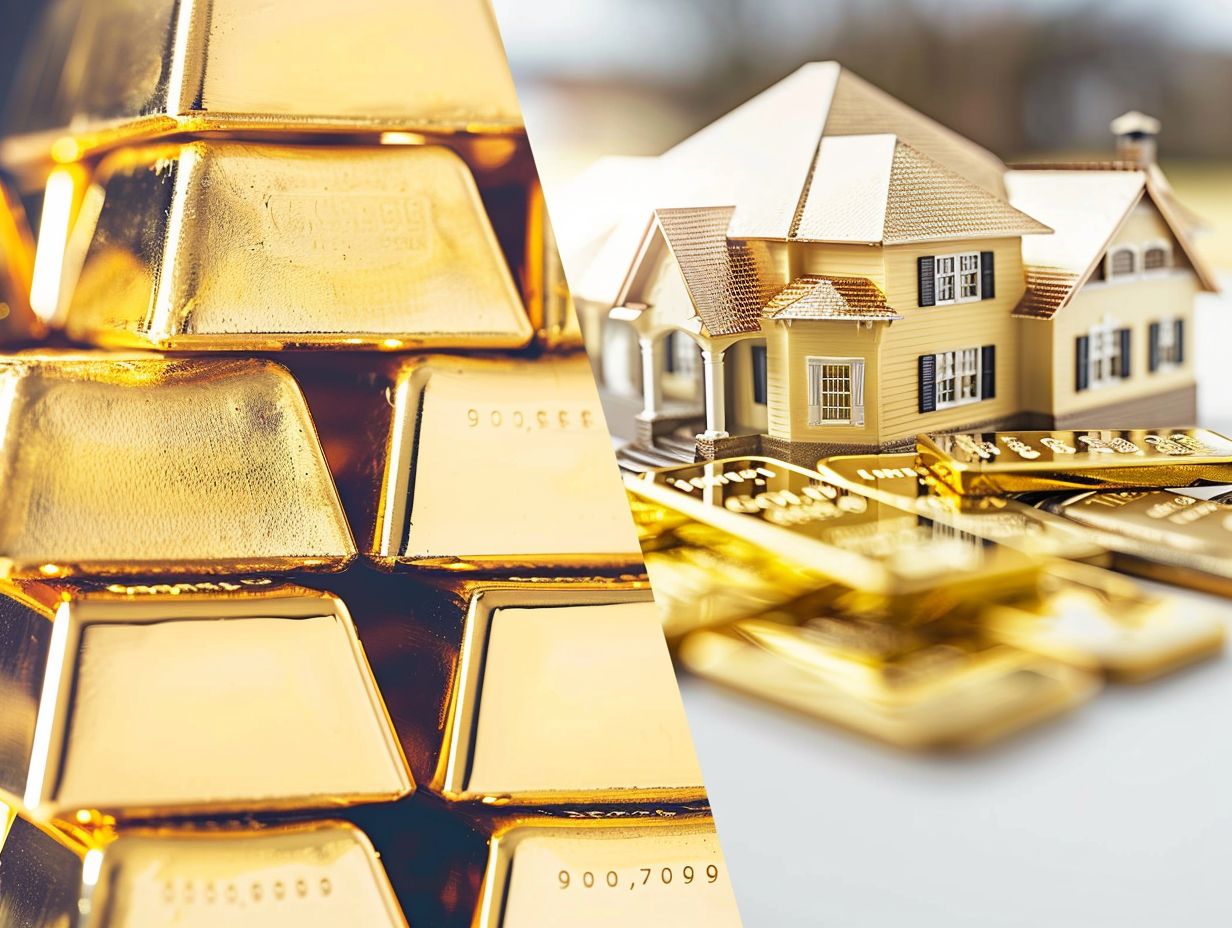
Exploring the future trends and influences shaping gold and real estate investments can provide valuable insights for investors looking to anticipate market developments and make informed decisions. By analyzing demand-supply dynamics, economic trends, and market forecasts, investors can position themselves to capitalize on emerging opportunities in these asset classes.
When considering the future of gold investments, the evolving global economic landscape and geopolitical uncertainties play a crucial role. Gold, often considered a safe-haven asset, tends to perform well in times of economic turmoil or inflationary pressures.
- Real estate investments are influenced by factors such as population growth, urbanization trends, and interest rates.
- Emerging technologies, environmental sustainability, and changing consumer preferences also impact real estate markets.
Investors can adopt a diversified approach by balancing their portfolio with both gold and real estate assets, leveraging the benefits of hedging against different economic scenarios and potential risks.
Market Factors Affecting Investments
Understanding the market factors that influence gold and real estate investments is essential for investors to navigate the complexities of these asset classes. Factors such as market demand, supply dynamics, economic performance, and regulatory changes can significantly impact the value and performance of gold and real estate assets.
Market demand plays a crucial role in determining the value of gold and real estate, as it directly influences their prices. For gold, factors like global geopolitical tensions, inflation expectations, and currency movements affect investor sentiment and demand. On the other hand, in the real estate sector, factors such as population growth, urbanization trends, and interest rates can drive demand for properties.
Supply dynamics also impact investments in gold and real estate. In the case of gold, mining production, central bank reserves, and recycling rates affect the availability of the precious metal in the market. Similarly, in real estate, new construction projects, housing inventory levels, and government policies on land use can influence property supply.
Diversification Strategies and Tax Efficiency
Implementing diversification strategies that incorporate gold and real estate investments can enhance the tax efficiency and overall performance of an investor’s portfolio.
By focusing on diversification, investors can reduce the risk of significant losses by spreading their investments across different assets, thereby not putting all their eggs in one basket. Investing in gold can act as a hedge against inflation and market volatility, providing stability during economic uncertainties. Real estate, on the other hand, offers the potential for long-term capital appreciation and consistent rental income streams.
Choosing the Right Investment
Selecting the right investment between gold and real estate requires careful consideration of individual preferences, risk tolerance, and financial goals. Evaluating the potential returns, market conditions, and long-term value of gold and real estate assets can help investors make informed decisions that align with their investment objectives.
When deciding between investing in gold or real estate, investors should take into account the historical performance of these assets and how they align with their investment timelines. While gold tends to act as a safe-haven during economic uncertainties, real estate offers the potential for both rental income and capital appreciation over time. Understanding the correlation of these assets with the broader market dynamics and inflation rates is crucial in determining their suitability for an investor’s portfolio.
Diversification across different asset classes is also essential to mitigate risks and optimize returns.
FAQs on Gold and Real Estate Investments
Investors often have questions about gold and real estate investments regarding their suitability, risk factors, returns, and tax implications. Addressing frequently asked questions can help investors gain clarity on key aspects of these asset classes, enabling them to make informed investment decisions.
In terms of gold investments, one common query revolves around its suitability as a hedge against economic uncertainty. Gold is often seen as a safe haven asset that may provide a store of value in times of market turbulence. It’s essential to consider factors such as market conditions, portfolio diversification, and individual risk tolerance when evaluating gold’s role in an investment strategy.
Real estate investments, on the other hand, are frequently questioned for their potential returns and risks. Property values can appreciate over time, offering capital gains, rental income, and tax benefits. Understanding the local real estate market dynamics, property maintenance costs, and liquidity concerns are crucial considerations for investors looking to invest in real estate.


